

PDO thread lift and skin threading in Adelaide
PDO threads are a non-surgical option used by healthcare professionals to support skin structure and promote collagen production. Also known as skin threading or a PDO thread lift, the treatment is classified as a higher risk non-surgical cosmetic procedure because it involves inserting threads beneath the skin.
Threads made of absorbable suture material are placed under the skin by a trained practitioner. Depending on the thread type and your anatomy, this may help with the appearance of mild to moderate skin laxity in areas such as the lower face, jawline and neck. Any visible change is temporary and varies between individuals.
All patients must undergo a full consultation with a qualified healthcare professional to determine if this procedure is suitable. The consultation covers the procedure, the practitioner performing it, expected recovery, total cost, risks, alternatives and realistic expectations, so you can make an informed decision. Our practitioners will assess whether threads are clinically appropriate for you rather than assuming they suit every concern.
Please contact our North Adelaide or Malvern clinic to arrange a personalised consultation and assessment.
How PDO threads work
Skin threading uses absorbable threads placed beneath the skin, which the body gradually absorbs over several months. Some thread designs provide temporary mechanical support to the tissues. The body’s response to the threads may also encourage collagen production and changes in skin quality over time.
Because the threads dissolve, this is a temporary treatment rather than a permanent one, and results differ from person to person depending on individual anatomy, the technique used, and the specific threads applied. The degree of a lift cannot be guaranteed. A thread lift is not equivalent to a surgical facelift and is not suitable for all degrees of skin laxity.
Thread lift treatment at our Adelaide clinics
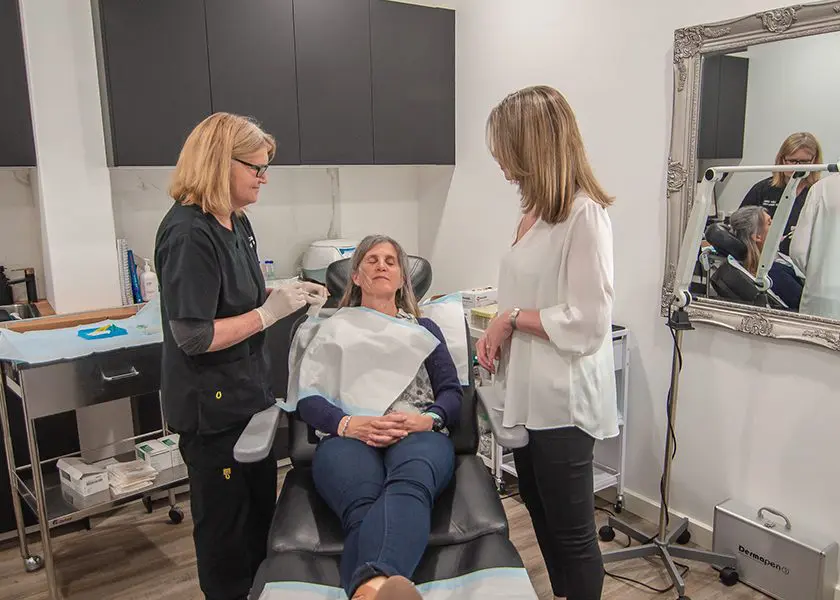
A thread lift is a regulated medical treatment and must be performed by a practitioner with appropriate education, training, experience and competence. Our practitioners will assess your skin, discuss what the treatment can realistically achieve for you, and talk you through the potential risks and alternatives. We’ll also give you information about the practitioner involved in your case.
We see patients at our North Adelaide and Malvern clinics. The decision to proceed is made only after assessment and informed consent.
Pricing
Your total cost depends on your treatment plan. This includes the areas assessed as appropriate, the heaviness of the tissue and the number of threads required. Your practitioner will confirm the total cost before you decide whether to proceed.
Common package pricing:
Mild full face (8 threads): $1,990
Moderate full face (12 threads): $2,990
Heavy full face (16 threads): $3,490
Nose threads: $1,390
Brow threads: $1,490
Frequently Asked Questions
What is a PDO thread lift?
A PDO thread lift, also known as skin threading, is a non-surgical treatment that involves the insertion of dissolvable threads under the skin to provide temporary structural support and a lifting effect. It is classified as a higher risk non-surgical cosmetic procedure because threads are inserted into tissue. Results vary and are not equivalent to a surgical facelift.
Are PDO threads safe?
No procedure is risk free, including non-surgical options such as PDO thread lifts. Potential complications include infection, bruising, swelling, tenderness, dimpling or puckering, asymmetry and thread migration or extrusion. Less commonly, nerve injury or scarring can occur. How much risk applies to you depends on your suitability, the technique used and the practitioner’s experience, which is why a consultation is required before treatment.
Can PDO threads migrate?
Thread migration can happen, but it isn’t frequent. It sits alongside other uncommon side effects such as minor surface irregularities, visible threads, or temporary asymmetry.
The likelihood of these outcomes varies depending on the technique used, the practitioner’s experience and individual factors. Discuss this with your practitioner at consultation so you understand the risks as they apply to you.
How long do PDO threads last?
The threads are gradually absorbed over several months, but that isn’t the same as how long any visible effect lasts. The effect can change as swelling settles and your body’s response develops. It also varies with your skin, the area treated and the threads used. Your practitioner will explain what’s realistic for you, including whether further treatment may be needed.
What happens during a thread lift?
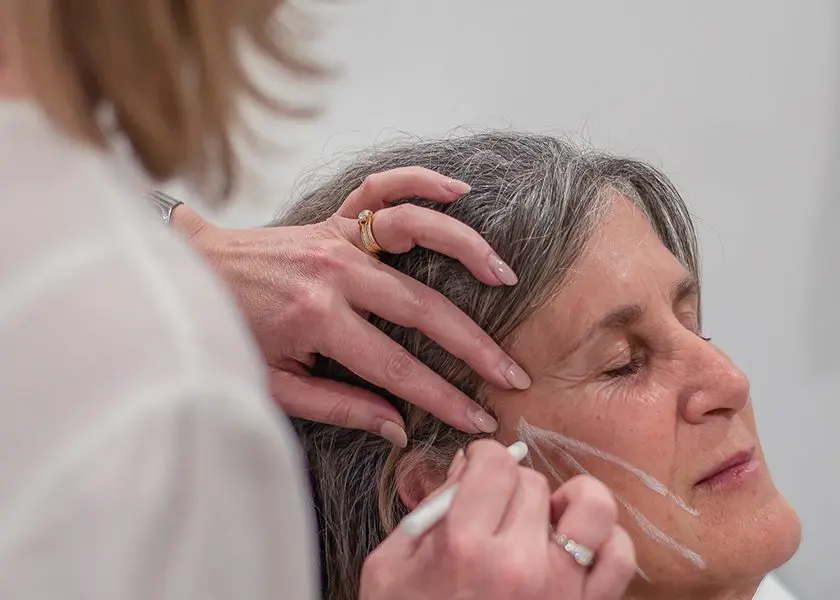
Firstly, the area is cleaned and then marked up for the intended thread placement. Local anaesthetic is then injected to create a block, and local infiltration is also added to the area of entry. A fine cannula is used to pull the thread beneath the skin. The thread is then delivered to the desired area and engaged, and the skin is raised and adjusted to the position that is desired. The exact technique depends on the thread design, the treatment area and your anatomy, and your practitioner will explain the plan beforehand.
Only small entry points are used, typically near the hairline. As with any procedure that penetrates the skin, scarring and infection are possible, and careful aseptic technique is used to reduce this risk. Treatment usually takes around one to one and a half hours, depending on the area and the number of threads.
Does a thread lift hurt?
Unlike a surgical face lift, there is no need for a general anaesthetic. A local anaesthetic is used to reduce pain.
Are there any side effects from a thread lift?
All procedures, including non-surgical options such as PDO thread lifts, carry potential risks and side effects. It is important to undergo a consultation with a qualified health professional to determine if this treatment is appropriate for you.
Potential side effects may include:
- Mild swelling, bruising, and tenderness in the treated area, typically resolving within a few days.
- A temporary sensation of tightness or mild dimpling of the skin, which usually resolves without intervention.
- Infrequent outcomes such as thread migration, minor surface irregularities, or temporary asymmetry.
- Rare but more serious risks may include infection, inflammation, nodule formation, or nerve involvement.
The outcome and side effects vary with individual anatomy, technique and the threads used, which is why treatment must be performed by an appropriately qualified and experienced practitioner. Your practitioner will explain the risks relevant to your treatment plan, including what to do if you have any concerns during recovery.
Is there any downtime after a thread lift?
A thread lift involves some downtime, though significantly less than a surgical facelift. Most patients take one to two days off work while swelling and discolouration fades, although this isn’t always necessary. Swelling, bruising, tenderness, tightness and temporary irregularities can occur. Recovery depends on the extent of treatment and how your body heals.
Your practitioner will give you individual aftercare instructions. These may include avoiding strenuous exercise for approximately five days and limiting facial pressure.
Who are suitable candidates for a thread lift?
There’s no single age range that makes someone suitable for a thread lift. It may be considered for people with mild to moderate skin laxity or changes in facial contour, including those who have had a surgical facelift and are noticing sagging again. It isn’t appropriate for every type or degree of laxity, and other approaches may be more suitable.
Suitability depends on your anatomy, skin quality, degree of laxity, medical history and expectations. It is determined at consultation.
Further Information
PDO thread lifting is a higher risk non-surgical cosmetic procedure that involves inserting dissolvable threads under the skin to provide a temporary lifting effect. It requires careful assessment, informed consent and treatment by an appropriately qualified and experienced registered health practitioner.
Temporary effects such as swelling, bruising, soreness, tightness or mild dimpling can take days or longer to settle. Potential risks include thread migration or extrusion, visible threads, asymmetry, inflammation, scarring and, more rarely, infection or nerve involvement. Your consultation will cover these alongside the proposed treatment plan, the practitioner, expected recovery, alternatives and total cost.
